Chapter 13: Q. 61 (page 768)
61. degrees of freedom numerator:
Short Answer
The degree of freedom in the numerator is .
/*! This file is auto-generated */ .wp-block-button__link{color:#fff;background-color:#32373c;border-radius:9999px;box-shadow:none;text-decoration:none;padding:calc(.667em + 2px) calc(1.333em + 2px);font-size:1.125em}.wp-block-file__button{background:#32373c;color:#fff;text-decoration:none}
Learning Materials
Features
Discover
Chapter 13: Q. 61 (page 768)
61. degrees of freedom numerator:
The degree of freedom in the numerator is .
All the tools & learning materials you need for study success - in one app.
Get started for free
A video game developer is testing a new game on three different groups. Each group represents a different target market for the game. The developer collects scores from a random sample from each group. The results are shown in the Table.
At the significance level, are the scores among the different groups different?
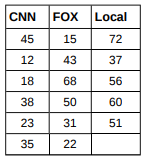
A researcher wants to know if the mean times (in minutes) that people watch their favorite news station are the same. Suppose that Table 13.24 shows the results of a study.

Suppose a group is interested in determining whether teenagers obtain their driver's licenses at approximately the same average age across the country. Suppose that the following data are randomly collected from five teenagers in each region of the country. The numbers represent the age at which teenagers obtained their driver's licenses.
a) Decision: _____
b) Conclusion: _____
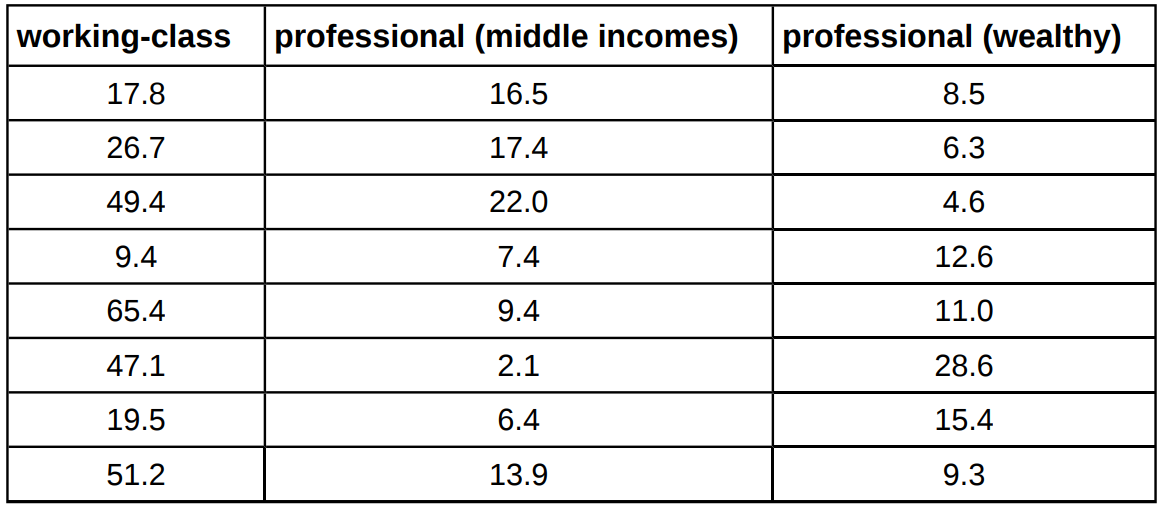
A grassroots group opposed to a proposed increase in the gas tax claimed that the increase would hurt working-class people the most, since they commute the farthest to work. Suppose that the group randomly surveyed individuals and asked them their daily one-way commuting mileage. The results are in Table 13.22. Using a significance level, test the hypothesis that the three mean commuting mileages are the same.

The New York Choral Society divides male singers up into four categories from highest voices to lowest: Tenor1, Tenor2, Bass1, Bass2. In the table are heights of the men in the Tenor1 and Bass2 groups. One suspects that taller men will have lower voices, and that the variance of height may go up with the lower voices as well. Do we have good evidence that the variance of the heights of singers in each of these two groups (Tenor1 and Bass2) are different?
| Tenor1 | Bass2 | Tenor1 | Bass2 | Tenor1 | Bass2 |
| 69 | 72 | 67 | 72 | 68 | 67 |
| 72 | 75 | 70 | 74 | 67 | 70 |
| 71 | 67 | 65 | 70 | 64 | 70 |
| 66 | 75 | 72 | 66 | 69 | |
| 76 | 74 | 70 | 68 | 72 | |
| 74 | 72 | 68 | 75 | 71 | |
| 71 | 72 | 64 | 68 | 74 | |
| 66 | 74 | 73 | 70 | 75 | |
| 68 | 72 | 66 | 72 |
What do you think about this solution?
We value your feedback to improve our textbook solutions.