/*! This file is auto-generated */ .wp-block-button__link{color:#fff;background-color:#32373c;border-radius:9999px;box-shadow:none;text-decoration:none;padding:calc(.667em + 2px) calc(1.333em + 2px);font-size:1.125em}.wp-block-file__button{background:#32373c;color:#fff;text-decoration:none} Q. 89 The time (in years) after reachi... [FREE SOLUTION] | 魅影直播

魅影直播

The time (in years) after reaching age 60that it takes an individual to retire is approximately exponentially distributed with a mean of about five years. Suppose we randomly pick one retired individual. We are interested in the time after age

60to retirement.

a. Define the random variable.X=_________________________________.

b. Is Xcontinuous or discrete?

c.X~=________

d.=________

e.=________

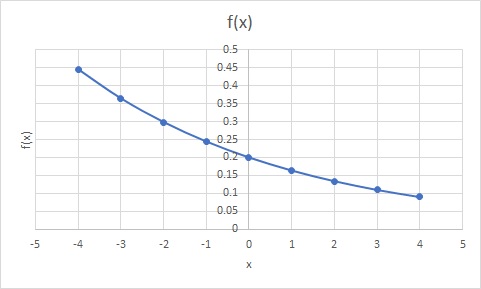
f. Draw a graph of the probability distribution. Label the axes.

g. Find the probability that the person retired after age 70.

h. Do more people retire before age 65or after age 65?

i. In a room of 1,000people over age 80, how many do you expect will NOT have retired yet?

Short Answer

Expert verified

a. X=the time (in years) after reaching age 60 that it takes an individual to retire

b. Xis continuous.

c. X~Exp15

d. five

e. five

f. Check student鈥檚 solution.

g.0.1353

h. before

i.18.3

Step by step solution

01

introduction

The time (in years) after reaching age 60that it takes an individual to retire is approximately exponentially distributed with a mean of about five years.

02

Explanation (part a)

The definition of the random variable X is given as the time after 60years of age to retirement.

03

Explanation (part b)

The time (in years) after reaching age 60that it takes an individual to retire is approximately exponentially distributed with a mean of about five years. Therefore, Xis continuous.

04

Explanation (part c)

According to the provided information on the problem, the random variable Xis exponentially distributed and can be defined as below:

localid="1651916931002" X~Exp1X~Exp15X~Exp0.2where,m=0.2

05

Explanation (part d)

The mean can be represented as below:

=5

06

Explanation (part e)

The standard deviation is represented as follows:

==5

07

Explanation (part f)

It is given that X~Exp(0.2)so it clear that,

m=0.2
And, the general form of the probability density function of the exponential distribution is given below,

f(x)=me-mx=f(x)=(0.2)e-(0.2)x

The maximum value of f(x)which will lie on the y-axis and at x=0will be:

f(x)=(0.2)e-(0.20)=0.2

The value of f(x)for different values of x, we get

x
f(x)
-40.445108
-30.364424
-20.298365
-10.244281
00.2
10.163746
20.134064
30.109762
40.089866

From the above table, the graph of the probability distribution is given as:
08

Explanation (part g)

The probability distribution of an Exponential distribution is:

f(x)=ex;x>0

person retired after age 70years.

Then the number of years after the retirement age is70-60=10years.

The probability of (X>10)is as follows:

10exdx=ex10=e0.20100=0.1353

09

Explanation (part h)

According to the given information, the retirement age is 60years. So, the number of people retire before the age65.

10

Explanation (part i)

The probability distribution of an Exponential distribution is:

f(x)=ex;x>0

The person retired after age 80years.

Then the number of years after the retirement age is, 80-60=20years.

The probability of localid="1651510500745" X>20is as follows:

P=20exdx=ex20=e0.20200=0.0183

Total people in a room n=1000

The number of people that will not retire yet is given by,

nP=10000.0183=18.3

Unlock Step-by-Step Solutions & Ace Your Exams!

  • Full Textbook Solutions

    Get detailed explanations and key concepts

  • Unlimited Al creation

    Al flashcards, explanations, exams and more...

  • Ads-free access

    To over 500 millions flashcards

  • Money-back guarantee

    We refund you if you fail your exam.

Over 30 million students worldwide already upgrade their learning with 魅影直播!

One App. One Place for Learning.

All the tools & learning materials you need for study success - in one app.

Get started for free

Most popular questions from this chapter

At an urgent care facility, patients arrive at an average rate of one patient every seven minutes. Assume that the duration between arrivals is exponentially distributed.

a. Find the probability that the time between two successive visits to the urgent care facility is less than 2minutes.

b. Find the probability that the time between two successive visits to the urgent care facility is more than 15minutes.

c. If 10minutes have passed since the last arrival, what is the probability that the next person will arrive within the next five minutes?

d. Find the probability that more than eight patients arrive during a half-hour period.

Use the following information to answer the next three exercises.

The Sky Train from the terminal to the rental鈥揷ar and long鈥搕erm parking center is supposed to arrive every eight minutes. The waiting times for the train are known to follow a uniform distribution.

79. What is the average waiting time (in minutes)?

a. zero

b. two

c. three

d. four

A subway train arrives every eight minutes during rush hour. We are interested in the length of time a commuter must wait for a train to arrive. The time follows a uniform distribution. a. Define the random variable. X = _______ b. X ~ _______ c. Graph the probability distribution. d. f(x) = _______ e. 渭 = _______ f. 蟽 = _______ g. Find the probability that the commuter waits less than one minute. h. Find the probability that the commuter waits between three and four minutes. i. Sixty percent of commuters wait more than how long for the train? State this in a probability question, similarly to parts g and h, draw the picture, and find the probabilit

Carbon-14 is a radioactive element with a half-life of about

5,730 years. Carbon-14 is said to decay exponentially. The decay rate is 0.000121. We start with one gram of carbon-14.

We are interested in the time (years) it takes to decay carbon-14. Are the data discrete or continuous?

At a 911call center, calls come in at an average rate of one call every two minutes. Assume that the time that elapses from one call to the next has the exponential distribution.

a. On average, how much time occurs between five consecutive calls?

b. Find the probability that after a call is received, it takes more than three minutes for the next call to occur.

c. Ninety-percent of all calls occur within how many minutes of the previous call?

d. Suppose that two minutes have elapsed since the last call. Find the probability that the next call will occur within the next minute.

e. Find the probability that less than 20calls occur within an hour.

See all solutions

Recommended explanations on Math Textbooks

View all explanations

What do you think about this solution?

We value your feedback to improve our textbook solutions.

Study anywhere. Anytime. Across all devices.
