Chapter 2: Q 8 (page 43)
Explain why scarcity leads to tradeoffs.
Short Answer
Scarcity occurs when resources are limited and unable to meet the demand a person has. So an individual has to make a choice ( tradeoff).
/*! This file is auto-generated */ .wp-block-button__link{color:#fff;background-color:#32373c;border-radius:9999px;box-shadow:none;text-decoration:none;padding:calc(.667em + 2px) calc(1.333em + 2px);font-size:1.125em}.wp-block-file__button{background:#32373c;color:#fff;text-decoration:none}
Learning Materials
Features
Discover
Chapter 2: Q 8 (page 43)
Explain why scarcity leads to tradeoffs.
Scarcity occurs when resources are limited and unable to meet the demand a person has. So an individual has to make a choice ( tradeoff).
All the tools & learning materials you need for study success - in one app.
Get started for free
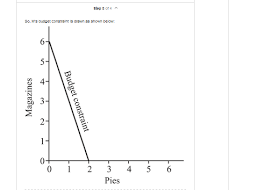
Draw Marie’s budget constraint with pies on the horizontal axis and magazines on the vertical axis. What is the slope of the budget constraint?

Would an op-ed piece in a newspaper urging the adoption of a particular economic policy be a positive or
normative statement?
During the Second World War, Germany’s
factories were decimated. It also suffered many human casualties, both soldiers and civilians. How did the war affect Germany’s production possibilities curve?
It is clear that productive inefficiency is a waste since resources are used in a way that produces less goods and services than a nation is capable of. Why is allocative inefficiency also wasteful?
Do economists have any particular expertise at making normative arguments? In other words, they have expertise at making positive statements (i.e., what will happen) about some economic policy, for example, but do they have special expertise to judge whether or not the policy should be undertaken?
What do you think about this solution?
We value your feedback to improve our textbook solutions.